
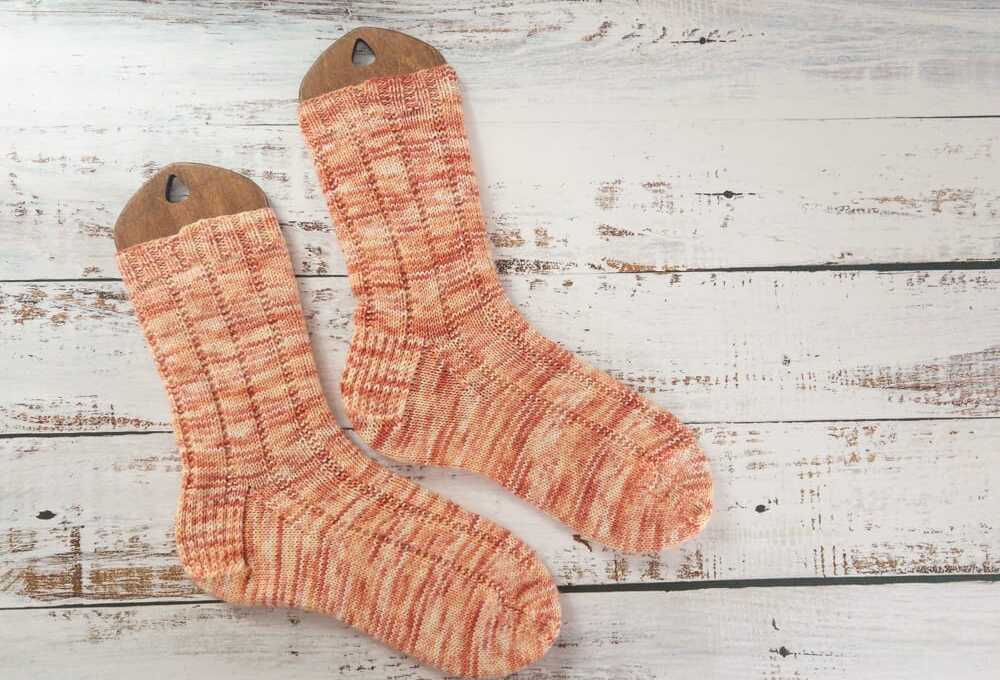

For years, one of my favorite patterns for variegated sock yarn was Vanilla Latte Socks by Virginia Rose-Jeanes. It was a simple cuff-down sock recipe with a 2 × 6 broken rib pattern, and it hit that sweet spot between interesting and easy.
The broken rib gave me just enough texture to keep the knitting from feeling boring, but it was still simple enough to let a beautiful hand-dyed yarn do most of the talking. I’ve knitted this style of sock many times, and I’ve shared several pairs here on the blog over the years.
Unfortunately, the original Vanilla Latte Socks PDF is no longer available. Virginia’s series of video tutorials is still on YouTube, which you can watch here, but I prefer having written instructions so I decided to write down how I make mine.
These instructions were written from scratch using my usual sock-construction methods and a different stitch arrangement than Virginia’s. This is not a reproduction of the original PDF, but it was absolutely inspired by the many pairs of Vanilla Latte Socks I’ve enjoyed knitting over the years.
A Broken Rib Sock Pattern With One Important Twist
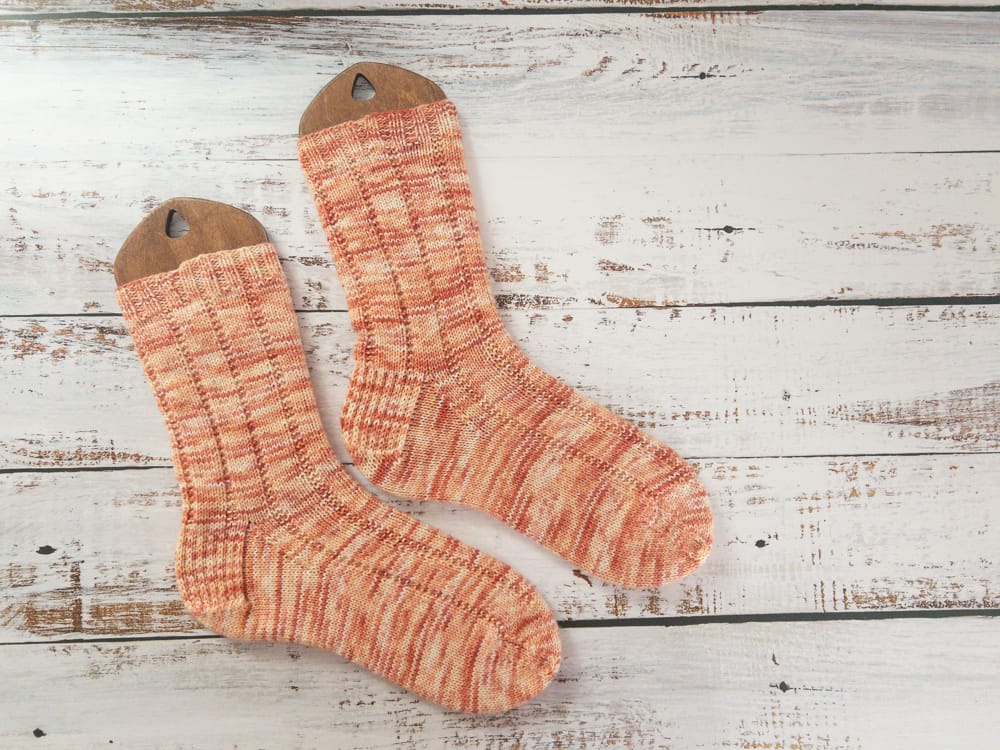
My version is called Another Broken Rib Sock Pattern, because I certainly didn’t invent broken rib socks. This is a classic stitch pattern paired with a traditional cuff-down sock construction. The one big difference between my instructions and other broken-rib patterns out there is that I arranged the broken rib so it stays centered across the instep, which is a modification I’ve made to every pair I’ve knitted over the years.
This is a basic cuff-down sock with:
- A 2 × 2 ribbed cuff
- A centered 2 × 6 broken rib pattern
- A traditional slipped-stitch heel flap
- A heel turn and gusset
- A round toe finished with Kitchener stitch
The pattern is written for 64 stitches and produces an adult medium sock measuring about 7.5 inches around the leg. It uses fingering-weight sock yarn and US 1.5 needles, although you should always use the needle size that gives you the correct gauge.
These socks are easy to knit, but the pattern isn’t designed as a first-ever sock tutorial. It assumes you already understand the basic steps involved in knitting a cuff-down sock, including turning a heel, picking up gusset stitches, and grafting the toe.
A Simple Sock Pattern for Variegated Yarn
I love tonal and variegated sock yarns in the skein, but I don’t always love how they look in my finished socks. I tend to choose intricate lace and cable patterns, and I’m often disappointed when the pretty yarns muddy up my stitchwork. Broken rib is a great solution to that and is my go-to for high-contrast yarns because it adds texture without creating a lot of visual noise.
For this pair, I used Global Backyard Fingering Weight Sock Yarn in Peach Orchard, a peach-and-cream tonal yarn. The colors shift enough to keep the knitting interesting, but the simple ribbing doesn’t get lost in them. I love Global Backyard Yarns, and I interviewed the dyer, Gina, here if you want to learn more about hand-dyed yarn.
My Yarn Pooling Insurance Policy
The other challenge with variegated yarn is color pooling around the heel flap and gusset.
Pooling happens when sections of color begin stacking in the same area instead of scattering evenly. A heel flap and gusset can make this more noticeable because the number of stitches being worked changes so dramatically.
First, you work back and forth over half the sock. Then you pick up a large number of gusset stitches and gradually decrease back to your original stitch count. Those changing row lengths can interrupt the color pattern you saw on the leg.
My solution is very low-tech: I add a lifeline before beginning the heel flap.
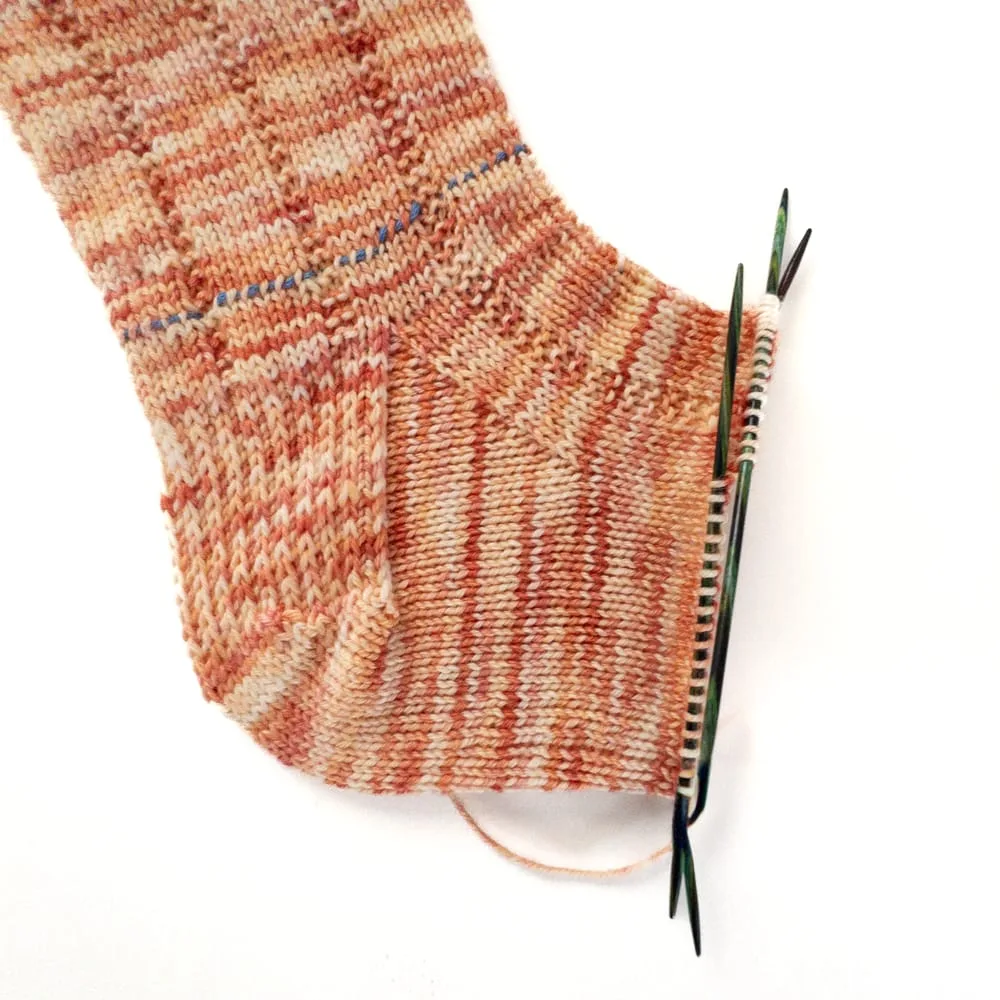
Then, if the yarn starts doing something wonky around the gusset, I can unravel back to the lifeline and replace the heel flap with a short-row heel. A short-row heel keeps the overall stitch count more consistent, so it disguises pooling.
My PDF includes this little “insurance policy” reminder, along with a longer explanation and photos showing the difference between a pooled heel flap and a short-row heel worked in the same yarn. (As my colleagues can attest, I never produce anything that doesn’t include an addendum!)
Download the Free Broken Rib Sock Pattern
You can download the complete PDF here:
The PDF includes the full sock instructions, abbreviations, gauge and sizing information, my yarn-pooling tips, and notes on using a lifeline before the heel.
I hope this pattern helps anyone who misses having written instructions for a simple broken rib sock, especially the knitters who have landed on my older Vanilla Latte Socks posts looking for the original pattern.
And, of course, I’m grateful to Virginia Rose-Jeanes for introducing so many of us to this wonderfully simple sock formula in the first place.
And now, as usual, I’ll end my blog post with more details about my project!
yarn details
Global Backyard Sock Yarn in Peach Orchard
Fingering Weight
85% Superwash Extrafine Merino (19.5 micron) and 15% Nylon
100 g / 437 yd skeins
Purchased in January 2026
project details
pattern: “Another Broken Rib Sock Pattern”
size knit: CO 64, sized to fit a U.S. Women’s 6.5 shoe (sized using my Magic Toe Calculator)
needles: US size 1.5 (2.5 mm) wood DPNs (from my Knit Picks Caspian collection)
gauge: 34.5 stitches x 46 rows over 4” in stockinette
yarn used: 328 yards (75 grams)
finished size: width of sock is 3.75’’ diameter (measured flat); leg: 8.5’’ from top of cuff to bottom of heel flap; foot: 8.75’’ from back of heel flap to tip of toe
duration: January – May 2026

Leave a Comment